
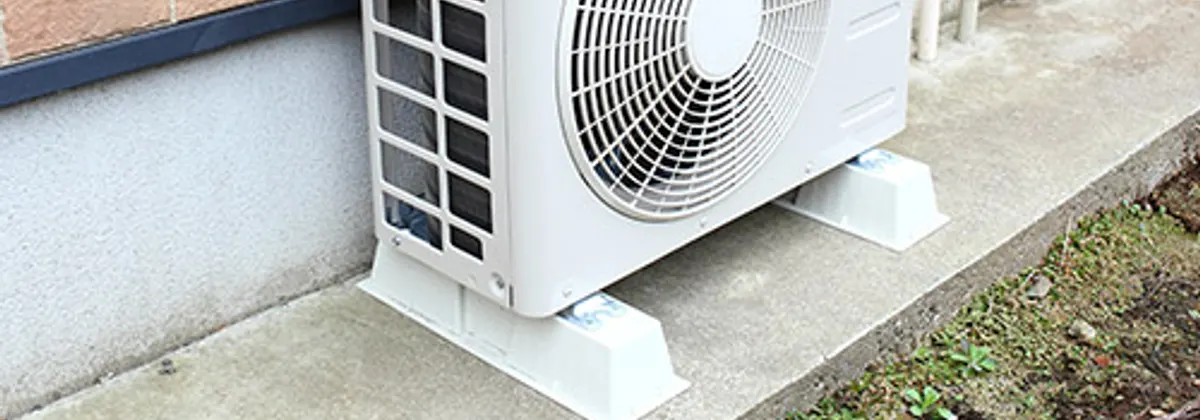
Split system air conditioners are the most common type in Australian homes. The name comes from their two parts: an indoor unit, usually mounted high on a wall, and an outdoor unit containing the compressor. A pair of insulated copper pipes carrying refrigerant, plus electrical cable, joins the two.
A split system conditions one room or one open area rather than a whole house. Most models sold today are reverse cycle, which means they heat as well as cool.
Split systems are popular because they are one of the cheapest fixed systems to install, they are quiet indoors, they do not take up window space, and they are cheap to run.
Is a mini split the same as a split system?
Yes. Mini split, ductless mini split and ductless air conditioner are the American names for a split system. “Ductless” means the air comes straight out of the indoor unit on the wall rather than through ducts in the ceiling, which is how every split system works. A multi-zone mini split is what Australians call a multi-split: several indoor units running off one outdoor unit
How much does a split system cost?
As a guide, a single split system costs roughly $1,500 to $5,000 supplied and installed. A whole-home multi-split system costs around $7,700.
Where you land in that range depends most on capacity: a bedroom-size unit (about 2kW to 3.5kW) sits toward the low end, a large living-area unit (6kW to 9kW) toward the top. Brand, how far apart the indoor and outdoor units are, and any electrical work move it further. Figures are indicative only. We last reviewed them in October 2026.
Types of split system
Wall mounted (high wall)
The standard type. The indoor unit sits high on a wall so the air circulates properly. Capacities generally run from about 2kW for a small bedroom up to around 10kW for a large open-plan living area.
Reverse cycle
A reverse cycle split system runs the refrigeration cycle in reverse to heat as well as cool. In heating mode it pulls heat out of the outdoor air and moves it inside. It is the same technology as a heat pump. Reverse cycle costs less than buying a separate heater and air conditioner, and it is the cheapest way to heat most Australian homes.
Multi-split
A multi-split connects two or more indoor units to a single outdoor unit. You control each indoor unit separately, so you can set different temperatures in different rooms. It is a good option when you want several rooms conditioned but do not have space for multiple outdoor units, or cannot fit ducting.
One thing to know: on most multi-split systems the indoor units share one outdoor compressor, so they cannot run in heating and cooling modes at the same time.
The law does not require multi-split systems to carry a Zoned Energy Rating Label, so ask your installer for the performance figures in writing.
Cassette
A cassette unit sits flush in the ceiling with only a square grille visible, and blows air out in two, three or four directions. It does the same job as a wall unit but is less obtrusive. It needs enough ceiling space above, so it does not suit every room. A cassette is not the same thing as ducted air conditioning.
Floor console and bulkhead
Floor consoles sit at floor level, which suits rooms with full-height windows or limited wall space, and can work better for heating. Bulkhead units sit hidden in a bulkhead or ceiling void and feed one or two outlets.
What are the advantages of a split system?
- One of the lowest installed costs of any fixed air conditioner
- Quick to install, usually within a day
- Cheap to run, particularly inverter models
- Heats and cools from one system if reverse cycle
- Quiet indoors
- Single split systems carry a Zoned Energy Rating Label, so you can compare efficiency and estimated running costs before you buy
What are the disadvantages of a split system?
- Conditions one area only, so covering a whole house means several systems and several outdoor units
- The outdoor unit needs a position with clearance for airflow, and it makes noise that can affect neighbours
- In apartments and townhouses you may need body corporate or strata approval to mount an outdoor unit
- The indoor unit is visible on the wall
Which capacity do you need?
Getting the capacity right matters more than getting the brand right. A unit that is too small runs flat out and never quite gets there. A unit that is too big cycles on and off, costs more up front, and dehumidifies poorly.
Read our guide to sizing an air conditioner, or ask your installer to do a heat load assessment of the room.
Split or ducted?
For one or two rooms, split systems cost less to buy and less to run. For four or more areas, ducted usually wins, and three is a toss-up worth quoting both ways. Ducted and split systems side by side
Installation
Split system installation is not a job to do yourself. Anyone installing or decommissioning a single-head split system must hold a Refrigerant Handling Licence issued by the Australian Refrigeration Council, and the electrical work must be done by a licensed electrician.
Brands to compare
Every major brand sells split systems in Australia. Our reviews cover each one’s range and warranty, with the Government’s energy ratings where they apply: ActronAir, Daikin, Fujitsu (GENERAL), Haier, Hisense, LG, Mitsubishi Electric, Mitsubishi Heavy Industries, Panasonic, Samsung and Toshiba. If you are weighing up the two Mitsubishis, start here.