
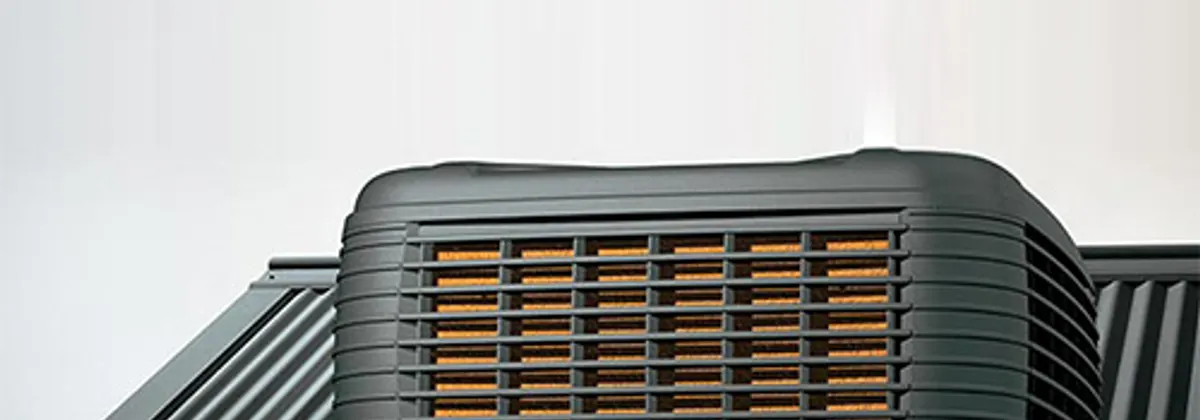
Evaporative cooling works on the same principle as a sea breeze on wet skin. A fan draws hot, dry outside air through pads that are kept wet. As the water evaporates it absorbs heat, and the cooled air is pushed into the house. The warm air already inside is pushed out through open windows and doors.
That is the key difference from refrigerated air conditioning. An evaporative cooler constantly replaces the air in your home with fresh outside air. A refrigerated system recirculates the same air behind closed doors and windows.
Where evaporative cooling works, and where it does not
Evaporative cooling works well in hot, dry, inland climates. It works poorly in humid conditions, because the drier the incoming air, the more cooling you get from evaporation.
As a general guide:
- Good fit: Perth, Adelaide, Canberra, Melbourne and most inland areas, where summer humidity is typically low
- Poor fit: Brisbane, Cairns, Darwin, and coastal Sydney, where summer humidity is high
Humidity varies day to day, not just by city. Even in a dry climate, an evaporative cooler will feel less effective during a humid spell. If your area gets a run of muggy days each summer and that would bother you, refrigerated is the safer choice.
Types of evaporative system
Ducted evaporative (whole house)
The usual choice for a whole home. A unit sits on the roof, and cooled air is distributed through ducts to vents in each room. This is the type most people mean by evaporative air conditioning.
Fixed room unit
A single unit fitted to an external wall or window, permanently wired and plumbed, cooling one room or open area.
Portable evaporative cooler
Sold in retail stores and cheap to buy, but the least effective. Portable coolers recirculate the indoor air and keep adding moisture to it, so without a good flow of air out of the house they can end up making a room feel warmer, not cooler.
Running costs and water use
The headline advantage is running cost. A ducted evaporative cooler uses less than half the electricity of a refrigerated air conditioner of similar capacity (energy.gov.au). Models with inverter-driven fan motors use less again, particularly on lower fan speeds.
Against that, evaporative cooling uses water, and more than most people expect. The Australian Government puts typical use at up to 25 litres an hour (energy.gov.au), while the Government’s YourHome guide says a whole-house system can use 25 litres or more an hour on hot, dry days. Usage varies a great deal with climate, model and fan speed.
Ask your installer for the expected hourly water use of the model you are quoted, for your city. In a water-restricted area, or on tank water, this may decide the question for you.
Advantages of evaporative air conditioning
- Much cheaper to run than refrigerated air conditioning
- Lower purchase and installation cost than ducted refrigerated systems
- Brings in fresh outside air rather than recirculating indoor air
- Mechanically simpler, which usually means lower maintenance costs
- The cooled air keeps some moisture in it, which many people find more comfortable than dry conditioned air
Disadvantages of evaporative air conditioning
- Loses effectiveness as humidity rises
- Cools only. You will still need a separate heater for winter
- Needs windows and doors open, which affects security, noise and dust
- Uses water, typically up to 25 litres an hour, and more for a whole-house system on hot, dry days
- Rooms need good airflow, or the extra indoor humidity can cause condensation
- Roof-mounted units are exposed to weather and need seasonal maintenance
- Not covered by the Zoned Energy Rating Label, so efficiency is harder to compare between models
Evaporative or refrigerated?
Choose evaporative if you live inland or in a dry-summer city, you want the lowest running cost, you are happy to have windows open, and you already have heating sorted.
Choose refrigerated if you live somewhere humid, you want heating and cooling from one system, you have allergies or asthma and want filtered air, or you want to be able to shut the house up.
| Evaporative | Refrigerated | |
|---|---|---|
| Climate | Hot, dry, inland. Loses effectiveness as humidity rises | Any climate, humid included |
| Cost to run | Less than half the electricity of a refrigerated system of similar capacity | Higher |
| Water | Up to 25 litres an hour, more for a whole house on hot, dry days | None |
| Heating | None. Cools only | Reverse cycle heats as well |
| Windows and doors | Kept open | Kept shut |
| Air | Fresh outside air, with some moisture | Indoor air, recirculated and filtered |
| Cost to buy, whole home | Lower than ducted refrigerated | Higher |
| Energy label | Not covered by the Zoned Energy Rating Label | Required on single splits up to 30kW, not on ducted or multi-split |
Maintenance
Evaporative coolers need attention at the start of each cooling season. Pads should be checked and replaced when they are scaled or degraded, the water tray and bleed system cleaned, and the unit checked for blockages. Ask your installer what the annual service costs before you buy, and whether it is included for the first year.
Brands to compare
The evaporative brands are different from the ones you see in split systems. Evaporative cooler brands compared covers who makes what, their warranties and how they differ.