
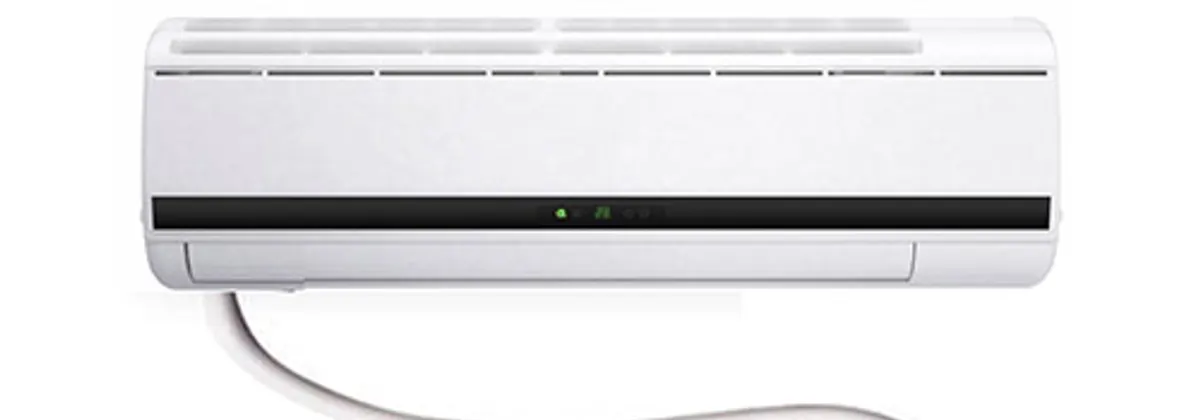
An inverter air conditioner varies the speed of its compressor instead of switching it on and off.
A non-inverter system has one speed: full. It runs at full power until the room reaches the set temperature, shuts off, then starts again when the room drifts. That produces a sawtooth of temperature swings, a surge of power at every start, and a noticeable clunk each time the compressor kicks in.
An inverter ramps up hard to reach the set temperature, then throttles back and holds a low, steady output. Think of the difference between driving with the accelerator flat then coasting, versus holding a constant speed.
What that means in practice
- Lower running costs. Most of the energy penalty in a non-inverter system comes from repeated starts and overshoot. Holding a steady low output avoids both.
- Steadier temperature. Less of the too-hot-then-too-cold cycle.
- Quieter. The compressor spends most of its time well below full speed.
- Reaches temperature faster, because it can run above its rated output at start-up.
- Better dehumidification, because longer, gentler run times pull more moisture out of the air than short bursts.
Are they worth the extra cost?
Inverter models cost more to buy. For any system you run regularly, the lower running cost usually makes up the difference well within the life of the unit, and you get the comfort and noise benefits from day one.
In practice the question rarely comes up any more. Nearly every split system and ducted system sold in Australia today is an inverter model. Non-inverter systems are now mostly confined to entry-level window and wall units, and some cooling-only models.
Where it is still worth checking is on a cheap unit for a room you barely use, such as a spare bedroom or a garage. There, a non-inverter model can be the sensible economy.
How to tell what you are being quoted
Look for the word inverter in the model description, or ask directly. Two other ways to check:
- Compare the Zoned Energy Rating Label star ratings. Inverter models almost always rate higher.
- Ask for the minimum capacity as well as the rated capacity. An inverter will list a range, such as 1.0kW to 4.2kW. A non-inverter will list a single figure.
Sizing an inverter
One caution. Inverters are most efficient when running at part load, which means an oversized inverter is less wasteful than an oversized non-inverter, but it is still a waste of money. Oversizing also reduces how well the system dehumidifies, because it reaches temperature before it has run long enough to pull moisture out.
Size the system for the space, not for the worst day of the decade.
Comparing brands
Every major brand sells inverter systems, so the choice comes down to warranty, range and efficiency. Brands at a glance compares them side by side, using the Government’s Energy Rating register and each manufacturer’s warranty.