
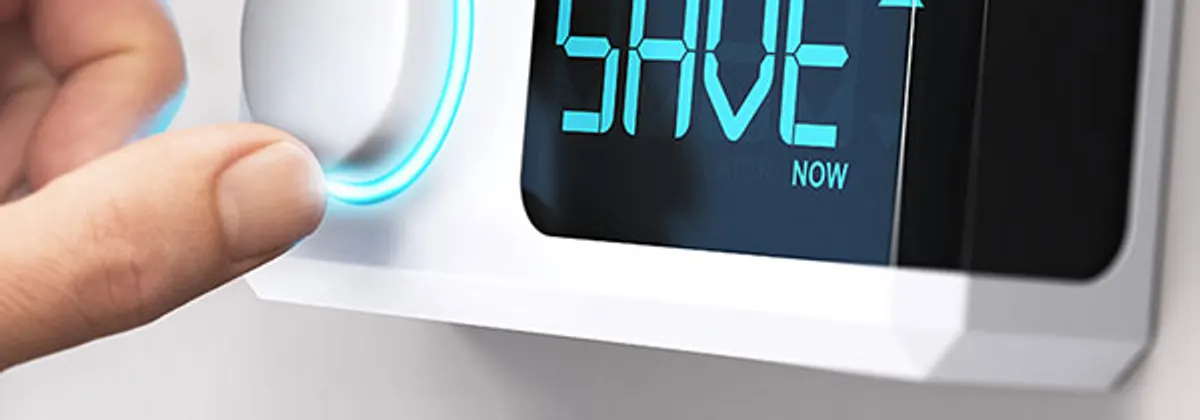
Set the thermostat to 25 to 27 degrees in summer and 18 to 20 in winter, and heat or cool only the rooms you are using. They are the first two changes on the list below, which runs roughly in order of impact, and both cost nothing.
Heating and cooling account for around 40% of household energy use in the average Australian home (YourHome). It is usually the biggest single item on the bill, which also makes it the place where small changes pay off most.
Here is what actually moves the needle, roughly in order of impact.
1. Set a sensible temperature
This is free and it is the biggest single lever you have.
- Summer: 25 to 27 degrees
- Winter: 18 to 20 degrees, as the Government’s YourHome guide recommends (YourHome)
Every extra degree of heating or cooling increases energy use by roughly 5% to 10% (energy.gov.au). Setting the air conditioner to 19 in summer instead of 25 can easily add half again to your running cost, and it will not cool the room any faster.
Check the room after the system has been running for about half an hour before you reach for the remote again.
2. Condition only the space you are using
- Close doors to rooms you are not in
- On a ducted system, turn off the zones you are not using. This is what zoning is for and it is the main running cost advantage of ducted
- Do not leave the whole house running to keep one room comfortable
3. Seal the draughts
Sealing gaps around doors and windows with weather strips is the cheapest efficiency upgrade available, and it helps in both seasons. The exception is if you use a flueless or open-flue gas heater, which needs ventilation to operate safely.
Other fabric improvements, in rough order of value: ceiling insulation, thick curtains with pelmets, external shading or deciduous trees on the sun-facing side, wall and floor insulation, and double glazing.
4. Manage the sun
- Close curtains and blinds on hot days before the room heats up, not after
- External shading works far better than internal, because it stops the heat before it reaches the glass
- In winter, do the reverse: let the sun in during the day and close up at dusk
5. Get ahead of the heat
On a day forecast to be hot, start the air conditioner before the house heats up. Pulling a hot house back down costs more than holding a cool one.
6. Use fans alongside the air conditioner
A ceiling or pedestal fan makes you feel about 3 degrees cooler while it is blowing on you, and costs roughly 2 cents an hour (energy.gov.au) to run. A fan cannot cool a room, only the person under it, but running one lets you set the thermostat a couple of degrees higher for the same comfort. That combination is usually cheaper than air conditioning alone.
7. Clean the filters
A blocked filter restricts airflow, which cuts capacity and raises running costs. Clean them every two to four weeks in heavy use. It takes ten minutes.
8. Get the size and installation right
This one is decided before you buy, and it is hard to fix later.
- An oversized system short-cycles, dehumidifies poorly and costs more up front and to run
- An undersized system runs flat out and never quite gets there
- A badly installed system, with the wrong refrigerant charge or leaking ductwork, loses efficiency permanently
Insist on a heat load assessment rather than a quote based on floor area, and use a licensed installer.
9. Choose an efficient system in the first place
If you are buying now, compare the Zoned Energy Rating Label star rating for your climate zone, between models of similar capacity. Efficiency differences compound over ten to fifteen years of use.
Reducing the carbon footprint
Three things make the largest difference:
Electrify the heating A reverse cycle air conditioner delivers roughly three to six units of heat per unit of electricity (energy.gov.au), so replacing gas or electric resistive heating with reverse cycle cuts both cost and emissions. Several states offer discounts for exactly this. See rebates in your state
Run it on your own solar If you have rooftop solar, running cooling during the day uses power you have generated rather than power you have bought. Some systems can be timed or scheduled to take advantage of this.
Dispose of the old system properly Never remove an old air conditioner yourself. Refrigerant left in the system must be recovered by a licensed technician. Venting it is both an offence and a significant greenhouse emission.
Estimating your running cost
If a system carries a Zoned Energy Rating Label, you can work it out:
Annual running cost = annual energy use (kWh) for your climate zone x your electricity tariff ($ per kWh)
Your tariff is on your electricity bill. Do this for each system you are quoted and compare.