
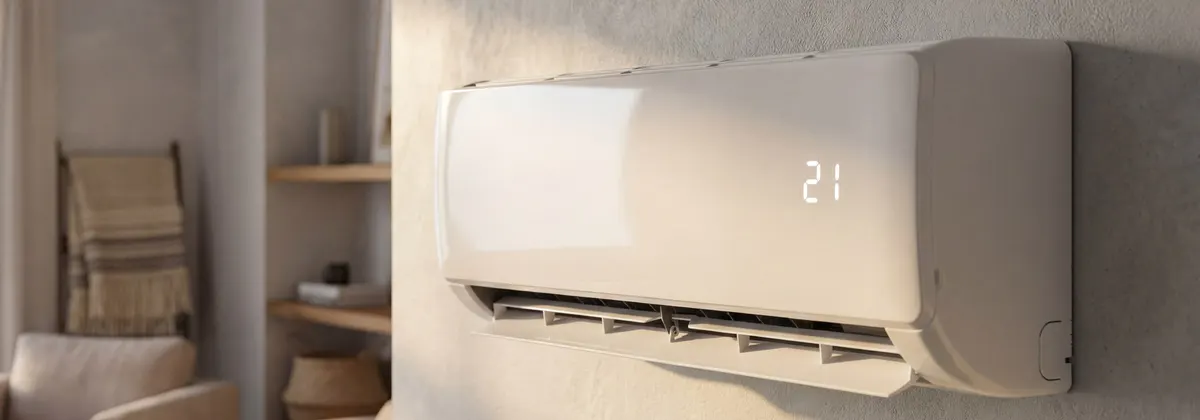
For most Australian homes, a reverse cycle air conditioner is the cheapest way to heat, and cheaper to run than a gas or electric heater. It moves heat in from outside rather than making it, so it delivers several units of heat for each unit of electricity, where an electric heater delivers one.
Australian homes are not built for winter, and heating is where most households spend their energy money, so choosing well here matters more than choosing well on cooling. Here is why reverse cycle usually wins, and where the exceptions are.
What does gas, electric and reverse cycle heating cost to run?
The ACT Government compared the cost of heating an average 50m² living area for a year:
| Heater | Heat out for each unit of energy in | Running cost a year |
|---|---|---|
| Electric element heater | 100% | $1,462 |
| Gas wall heater | 85% | $866 |
| Average reverse cycle air conditioner | 370% | $395 |
| Efficient reverse cycle air conditioner | 600% | $244 |
In that comparison an efficient reverse cycle system cost less than a third as much to run as the gas heater, and about a sixth as much as the electric heater. The figures use 2021/22 energy prices for an older home with a 2-star energy rating, so today’s dollar amounts will differ, and yours will depend on your climate, your home and your tariff. The order is what holds (ACT Government, checked 5 Oct 2026).
For switching from gas, the Victorian Government currently estimates savings of up to $460 a year on energy bills when an efficient reverse cycle air conditioner replaces a gas space heater, and up to $1,140 a year when it replaces a ducted gas heater (energy.vic.gov.au).
If you let a home in Victoria: from 1 Mar 2027, a space heater in a rental that breaks and cannot be repaired must be replaced with an efficient reverse cycle air conditioner in the main living area. Victoria’s rental rules and discount
The reason reverse cycle wins
An electric heater converts electricity into heat. One unit in, one unit out. That is the physical ceiling and no electric heater can beat it.
A reverse cycle air conditioner does not convert electricity into heat. It uses electricity to move heat that already exists in the outside air into your home. On the Australian market, reverse cycle systems deliver roughly three to six units of heat for every unit of electricity they use (energy.gov.au).
In other words, running a reverse cycle system costs somewhere between a third and a sixth of what an electric heater costs to produce the same warmth.
This is also why several state governments now offer discounts specifically for replacing gas heating with reverse cycle. See what is available in your state
What is the cheapest way to heat a house?
Reverse cycle air conditioner Cheapest to run for most homes. Heats and cools from one appliance. Higher up-front cost than a portable heater, but you are probably buying cooling anyway. Output drops in very cold weather, and it pauses occasionally to defrost.
Portable electric heater (fan, oil column, bar) Cheapest to buy, dearest to run per unit of heat. Genuinely useful for heating one person in one small room for a short time. A poor choice for heating a living area every evening through winter.
Ducted gas heating Effective and can be zoned, but expensive to run given gas prices and the electricity the fans use, and it loses heat through the flue. Reverse cycle ducted is cheaper to run.
Gas space heater Similar picture. Unflued gas heaters also release combustion products and moisture into the room, so they need ventilation, which works against the heating.
Wood heater Can be cheap to run if you have access to cheap or free wood, and works in a blackout. Against that: it needs loading and cleaning, produces smoke that affects your neighbours and your own air quality, and is restricted or banned in some council areas. Check local rules before installing one.
Hydronic and in-slab heating Comfortable and quiet, but a major investment and slow to respond. Usually only sensible during a build or a significant renovation.
The other advantages of reverse cycle
One appliance, one space You are not finding somewhere to store a heater each summer or a fan each winter.
Even heat across a room A portable heater warms whoever is near it. A reverse cycle system with a thermostat holds the whole space at a set temperature, which is why you stop noticing it.
Thermostat control You set a temperature rather than a power level, so you are not overheating the room and paying for it.
Filtration The system filters the air as it circulates, which many people with asthma or hay fever find helpful. This is not a medical claim. If air quality is a health issue for you, talk to your doctor about what will actually help.
Safety There is no exposed hot element and no open flame, which is a real consideration in homes with small children, and no combustion products indoors.
Where reverse cycle is not the answer
- A room you heat for twenty minutes a week. The capital cost will not pay back. A cheap portable heater is fine
- Very cold climates, where you should check the system’s rated heating capacity at low outdoor temperatures and its star rating in the cold climate zone, rather than assuming the headline figure
- Homes with no suitable outdoor unit position, or where strata rules prevent one
- During a blackout. Any electric heating stops. A wood heater does not
Getting the most out of it in winter
- Set the thermostat to 18 to 20 degrees. Every extra degree increases energy use by roughly 5% to 10% (energy.gov.au)
- Heat only the rooms you are using, and close doors
- Seal draughts around doors and windows first. It is the cheapest efficiency upgrade available
- Close curtains and blinds at dusk
- Clean the filters. Blocked filters cut both output and efficiency